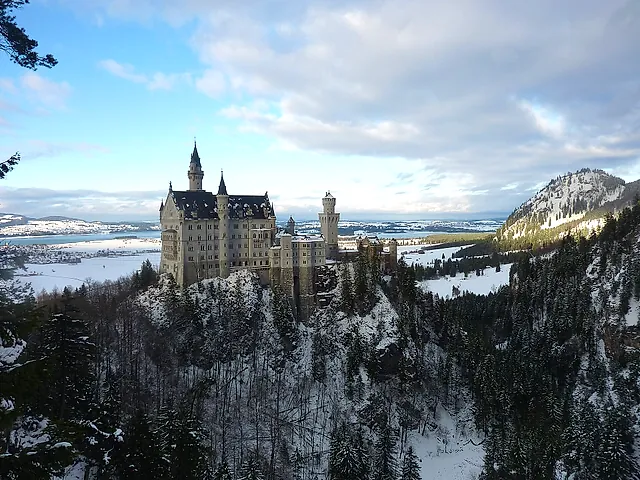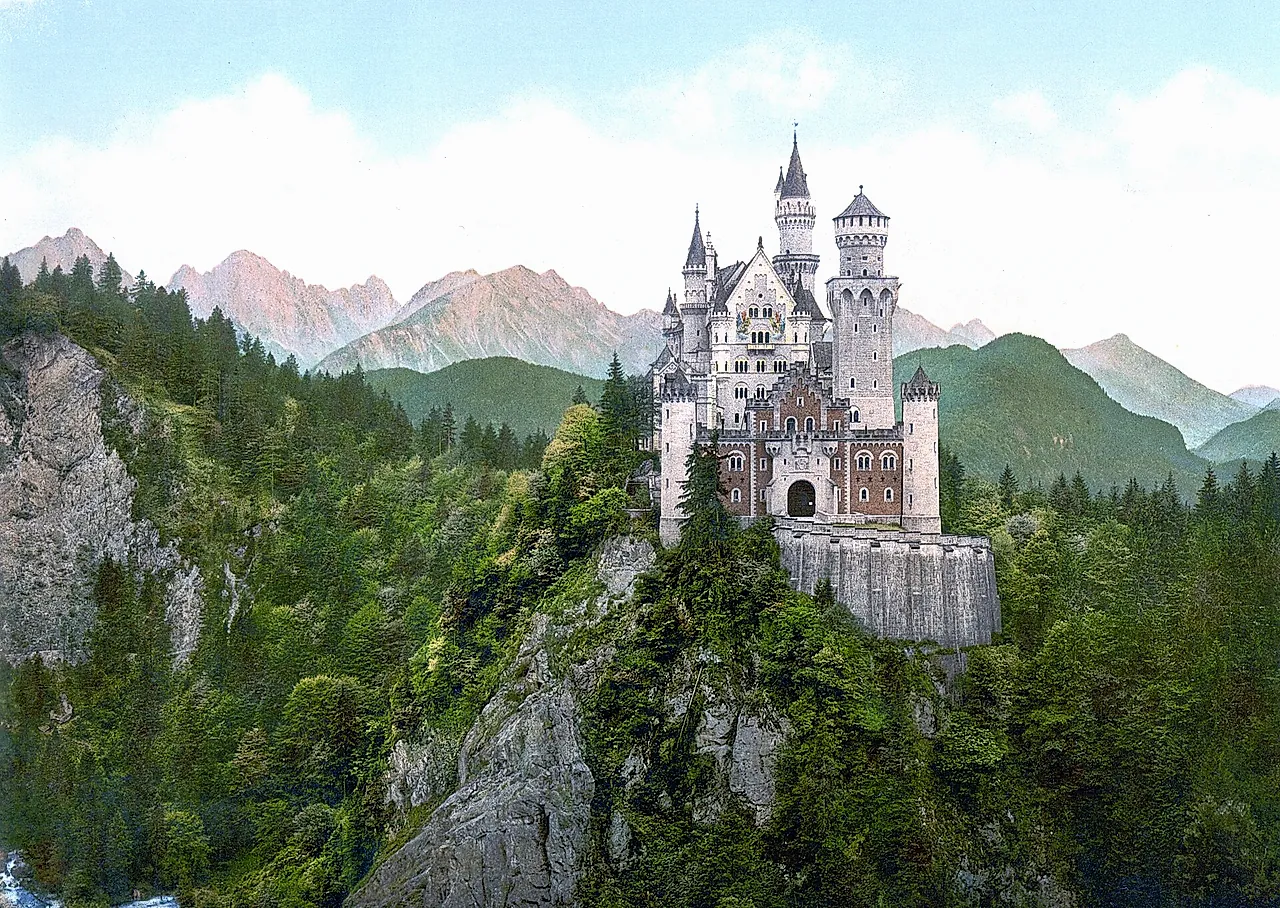
Short answer. Ludwig II was the young king of Bavaria who spent his reign building dream castles, inspired by Wagner’s operas and the legends of the Middle Ages. He died in 1886, before his most famous castle was finished, and the public walked into Neuschwanstein about seven weeks later. Read his story first, and the castles will make more sense. Then choose your visit on the cards below.
Castle tickets, guided tours and day trips from Munich
Neuschwanstein Castle: Timed Entry + Guided Tour
4.6· 1,251 reviews
from €60
Book tickets and tours →Who was the fairy-tale king?
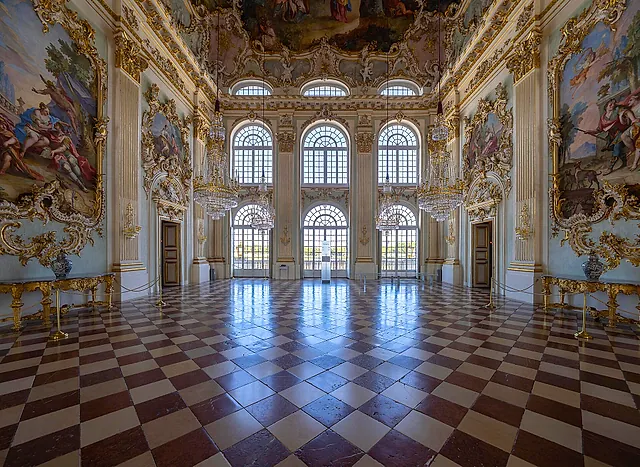
Ludwig was born on 25 August 1845 in Nymphenburg Palace in Munich, the summer home of the Wittelsbach family. He spent the summers of his boyhood at another castle: Hohenschwangau, in the hills near Füssen. Its walls were painted with scenes from the legends of Lohengrin and Parzival, and the boy grew up among them.
His father died in 1864, and on 10 March of that year Ludwig became king of Bavaria at the age of 18. One of his first acts was to call Richard Wagner to court. They met on 4 May 1864 in the Munich Residenz. Ludwig had Wagner’s “Tristan und Isolde” staged in Munich, and in 1868 the first performance of “Die Meistersinger”. Later he backed the festival theatre at Bayreuth and attended the whole “Ring” cycle there in 1876.
Politics left less room for him. After Bavaria lost the war against Prussia in 1866, the king no longer led his army in time of war. Ludwig turned his energy to building.
Why did he build Neuschwanstein?
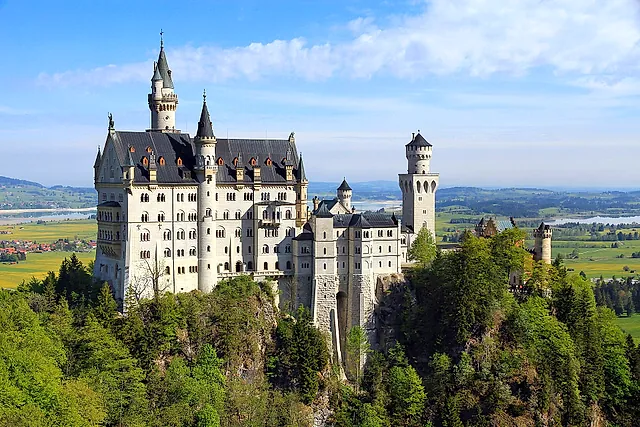
In 1867 he visited the Wartburg, a medieval castle in Germany, and the idea took shape. Neuschwanstein would be a castle out of an opera. The foundation stone was laid on 5 September 1869, on a rock above Hohenschwangau. Ludwig had taken his father’s room at Hohenschwangau after 1864, and now he built his own castle on the hill just above it.
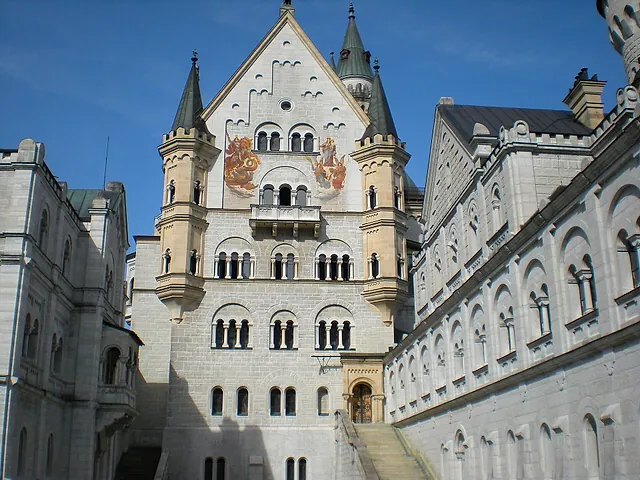
Christian Jank, a stage designer, drew the first picture. Eduard Riedel made the plans, and Georg von Dollmann and later Julius Hofmann directed the work. The result is Romanesque Revival in style, with Gothic and Byzantine touches, around a frame of steel. The gatehouse was ready in 1873, and Ludwig lived there first. In 1884 he moved into the main building, the Palas.
The rooms show his love of music and legend. The Singers’ Hall, on the fourth floor, was inspired by halls of the Wartburg and decorated with scenes from Lohengrin and Parzival. In 1880 a small study next to the sitting room became an artificial cave inspired by Tannhäuser, with coloured electric light and a real waterfall. The castle was never finished. When Ludwig died, about 14 rooms were ready. The 90-metre keep with a chapel was never built.
Its name came later, too. Only after the king’s death did the “new castle” become Neuschwanstein.
What about Linderhof and Herrenchiemsee?
Linderhof is the one Ludwig finished. From 1869 he enlarged the small royal lodge he had inherited from his father, and by 1878 the palace was complete. From 1876 he spent most of his time there. The outside is Baroque, the rooms are in rich Louis XV style, and in the park he built a Venus Grotto, an artificial cave with a lake lit by electric light from 1878. It stages the first act of Wagner’s Tannhäuser.
Herrenchiemsee is the one modelled on Versailles. Ludwig bought the island in 1873, and in 1878 work began on a palace that honours Louis XIV and Versailles. Only the central block was built. Ludwig stayed in it for just a few days, in September 1885. Its Hall of Mirrors has 17 arches.
These three are the great buildings of Ludwig’s reign, and UNESCO added the palaces of Ludwig II to the World Heritage List in 2025.
How did it end?
In 1886 the government moved to declare the king unfit to rule. On 10 June a government commission came to Neuschwanstein and was turned away. On 12 June a second commission arrived, and Ludwig was taken to Berg Castle. Four doctors had signed their report without examining him, and today many experts doubt it.
On 13 June 1886 Ludwig and his doctor, Bernhard von Gudden, were found dead in the Starnberger See. The official verdict was suicide by drowning, and people still discuss it. The king was buried in the Michaelskirche in Munich. His uncle Luitpold became regent.
Then something unexpected happened. Luitpold opened Neuschwanstein to the public on 1 August 1886. Until then, nobody outside the court had been inside. Today more than a million people visit it every year.
How can you follow Ludwig today?
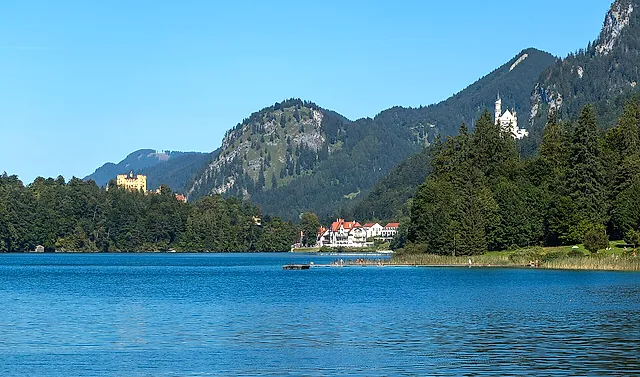
Start where the story starts. Hohenschwangau, the yellow castle beside the Alpsee, is where Ludwig grew up. Neuschwanstein stands above it, and the classic view of the castle is from the Marienbrücke, the bridge dedicated to Queen Maria. For the whole plan, read what to see around Neuschwanstein and our tickets guide. If you come in the colder months, see Neuschwanstein in winter.
Back in Munich, Nymphenburg is the palace where Ludwig was born. In its Marstallmuseum you can see carriages and sleighs that belonged to him. The guided tour of Nymphenburg and the Marstallmuseum lasts two hours, in English.
The Neuschwanstein tour, about 30 minutes inside, shows you the king’s rooms, but photos are not allowed in the castle. Take them outside, from the courtyard and from the path.
Short on time? Take the Neuschwanstein tour. Want the beginning of the story? Choose Nymphenburg.